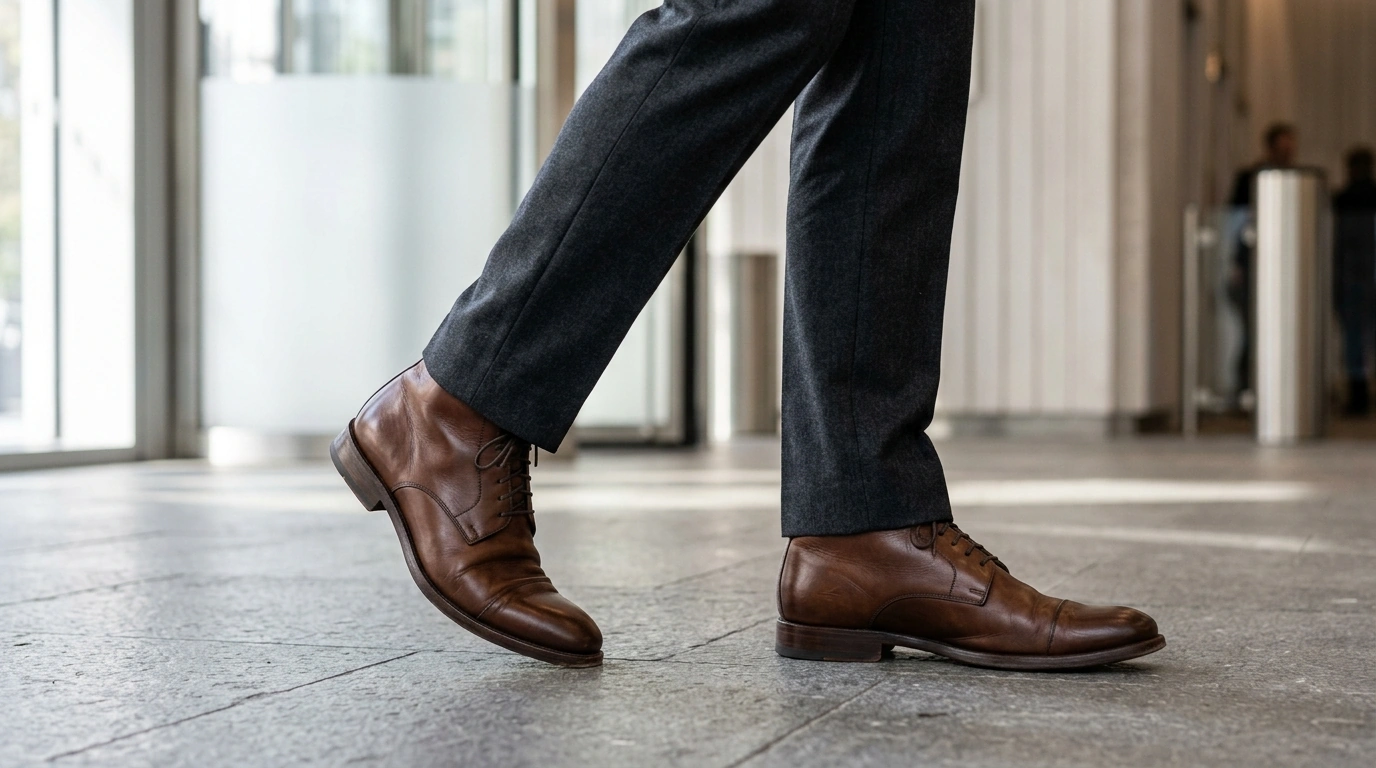
A polished outfit starts from the ground up. Our luxury men’s vintage leather ankle boots are built for the workweek—clean lines, a classic ankle height, and a refined finish that moves effortlessly from client meetings to evening plans. The goal is simple: sharper presence, less effort. When you want the confidence of a dress shoe but need the flexibility of a boot, a streamlined ankle profile is one of the most dependable choices you can make.
Not every ankle boot belongs in a professional rotation. A dress-ready pair earns its place by looking intentional with tailored clothing and staying clean through long days.
In a modern office context, ankle boots can look as sharp as lace-up dress shoes—often with a little more visual strength. You can treat them as your “default” when you’re moving between office, commute, and dinner without changing your entire look.
| Occasion | Best Pairing | Style Notes |
|---|---|---|
| Business meeting | Charcoal suit + light shirt | Keep the trouser opening tailored so the ankle profile stays clean. |
| Office day | Navy blazer + chinos | Match belt color to the boots for a composed finish. |
| Dress-casual dinner | Dark denim + knit polo or crewneck | Choose a slimmer denim cut to avoid bunching at the ankle. |
| Travel/work commute | Wool trousers + overshirt | A streamlined boot keeps the look elevated even in layered outfits. |
A dress-oriented ankle boot should feel secure and stable, not tight and punishing. The right fit keeps the silhouette sleek while still letting you get through a full schedule comfortably.
If you’re unsure between two sizes, prioritize toe comfort and a stable heel. You can usually fine-tune the feel with sock weight or a thin insole, but you can’t “break in” a boot that’s truly too short.
Vintage leather brings depth—subtle character that makes business outfits feel less generic. The key is keeping everything else controlled so the finish looks deliberate, not theatrical.
A luxury look is mostly maintenance: small habits that prevent dullness, salt staining, and premature creasing. If you want helpful general guidance on shoe selection and foot care, the American Orthopaedic Foot & Ankle Society is a solid resource; for broader footwear care standards, the British Footwear Association is also useful.
| When | What to Do | Why It Matters |
|---|---|---|
| After each wear | Wipe clean with a soft cloth | Prevents grime from setting into the leather. |
| Weekly (or as needed) | Brush and spot-clean | Keeps the finish even and presentable. |
| Monthly (typical use) | Condition lightly | Maintains suppleness and helps prevent dryness. |
| Before wet seasons | Apply a leather-safe protector | Helps reduce water spots and stains. |
| Ongoing | Rotate pairs + store with support | Preserves shape and extends lifespan. |
If you want a single pair that can anchor your weekday rotation, start here: Luxury Men’s Vintage Leather Ankle Boots – Dress & Business Wear. And if you’re building a more composed work environment overall, our team also recommends pairing sharp footwear with a clean, minimal space—like the Elegant Round Cream Coffee Table for a refined home office or waiting-area look.
Yes—choose a streamlined ankle boot and keep your trousers tailored so the boot’s profile stays clean. Coordinate your belt color with the boots and stick to classic suit shades for a professional finish.
Your heel should feel secure with minimal slip, and the toe box should allow comfortable movement without pressing the front when you stand or walk downhill. Mild stiffness at first is normal, but sharp pressure points are not.
Wipe them after wear, condition periodically, protect them ahead of wet weather, and rotate pairs so leather can rest. Storing with structure helps preserve a smooth, dress-ready shape.









Leave a comment