5-Piece Silicone Baby Tableware Set for Smoother, Less-Mess Mealtimes
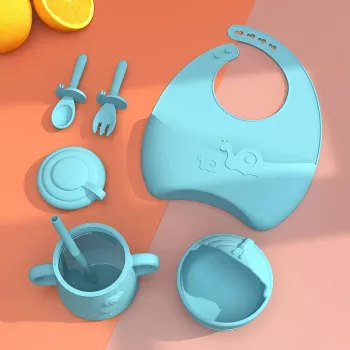
Mealtimes with little ones are equal parts learning and cleanup. Our team put together this 5-piece silicone set for daily use: a suction bowl to help keep food in place, easy-grip spoon and fork for early self-feeding, a small cup for sips, and an adjustable bib to catch the misses. It’s a simple, coordinated setup that supports routine—breakfast to bedtime snacks—without overcomplicating the high-chair tray.
If you’re ready to set up a consistent feeding station, you can start with our 5-Piece Silicone Baby Tableware Set with Suction Bowl, Spoon, Fork, Cup & Adjustable Bib.
What’s included (and what each piece is for)
- Suction bowl: helps resist sliding and tipping on smooth surfaces during scooping practice.
- Spoon and fork: sized for small hands learning to grip, scoop, and bring bites to the mouth.
- Cup: a dedicated little cup for water and milk as sipping skills develop.
- Adjustable bib: designed to sit comfortably and help catch drips, crumbs, and drops.
- Consistency matters: a matching set keeps the mealtime station predictable, which helps many babies and toddlers settle into the routine faster.
Set breakdown at a glance
| Piece |
Best used for |
Quick tip |
| Suction bowl |
Purees, oatmeal, yogurt, soft solids |
Press down firmly on a clean, dry, smooth tray or tabletop for the strongest hold. |
| Spoon |
First scoops and assisted feeding |
Offer a pre-loaded spoon sometimes, then switch to letting baby scoop—both teach skills. |
| Fork |
Soft finger foods and early “poke” practice |
Start with very soft foods (banana, avocado, well-cooked veggies) so success comes quickly. |
| Cup |
Small sips at meals and snack time |
Serve small amounts and refill—less to spill while learning. |
| Adjustable bib |
Everyday mess control |
Adjust for a snug-but-comfy fit; keep it consistent so baby recognizes “it’s mealtime.” |
Why silicone works well for everyday baby feeding
- Gentle feel: silicone tends to be soft against gums and comfortable for little hands to hold.
- Grip and stability: silicone often has more friction than hard plastics, which can help reduce skittering on trays and tables.
- Everyday durability: it’s built for repeated meals, drops, and busy kitchens.
- A calmer setup: fewer clatters and slips can reduce frustration during self-feeding practice.
- Better mealtime flow: stable pieces support skill-building while keeping attention on food, not runaway dishes.
When you’re starting solids, it also helps to lean on trusted guidance for what to serve and when. For general feeding milestones, you can review the American Academy of Pediatrics resource on starting solid foods.
Using the suction bowl effectively (so it actually stays put)
- Start with the surface: suction typically holds best on smooth, flat, non-porous surfaces. Wipe away crumbs and moisture first.
- Press-and-set: center the bowl, press down firmly, then test with a gentle tug before serving.
- Portion for progress: smaller portions reduce top-heaviness and make scooping easier for beginners.
- Teach the “peel”: when it’s time to remove the bowl, peel from the edge instead of pulling straight up to avoid sudden spills.
- If the tray is textured: try a smooth placemat on top of the tray, or practice on a smoother tabletop for a few meals.
If you’re setting up a dedicated snack spot in the living area, a smooth tabletop can make suction training easier. Our Elegant Round Cream Coffee Table can work as a wipeable family surface for supervised snack time (with the bowl pressed onto a clean, dry area).
Building self-feeding skills with the spoon and fork
- Start with predictable foods: thicker purees and soft mash are easier to scoop than thin liquids.
- Offer one utensil at a time: keeping the task simple reduces distraction and overwhelm.
- Use a “two-spoon” routine: one utensil for you to assist as needed, and one for your child to practice independently.
- Expect mess—mess is practice: early self-feeding is about coordination, wrist turns, and timing more than neatness.
- Keep sessions short and positive: stop when attention fades to avoid turning practice into a struggle.
As textures change, keep choking prevention in mind and supervise closely. The CDC’s overview of choking hazards is a helpful refresher when you’re deciding how to prep common foods.
The cup and bib: small tools that change the cleanup
- Cup routines reduce spills: offering small amounts more often supports learning without turning one tip-over into a major cleanup.
- Bib consistency helps: putting the bib on at the start of each meal becomes a familiar cue for sitting and eating.
- Adjustable fit matters: a comfortable bib is more likely to stay on—especially during the “I do it myself” phase.
- Keep a spare cloth nearby: quick wipes during the meal prevent sticky buildup on hands, the tray, and chair straps.
- Less chasing drops, more connection: a simple setup helps you stay present and responsive while your child explores food.
Care, cleaning, and everyday upkeep
If you like to read up on how food-contact materials are evaluated in the U.S., the FDA’s overview of food contact substances provides useful context.
FAQ
Will the suction bowl stick to any surface?
Suction typically performs best on clean, dry, smooth, non-porous surfaces. Textured trays, crumbs, and moisture can break the seal, so wipe the surface first and press firmly to set the bowl.
When should a baby start using a spoon and fork?
Timing varies by development, but many babies start practicing around the time solids begin, with close supervision. Follow your pediatric guidance and readiness cues (interest in food, ability to sit with support, bringing hands to mouth) rather than a strict age.
How do you clean silicone baby tableware to keep it fresh?
Wash soon after use, scrub around creases and edges, rinse thoroughly, and dry completely before storing. Inspect regularly for wear and replace any item that shows damage.
Recommended for you









Leave a comment