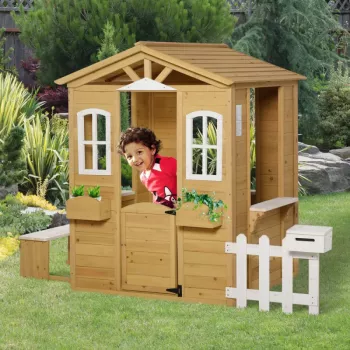
A playhouse changes the backyard rhythm: kids step into their own “little home,” open and close real-feeling doors and windows, and start creating stories that last for hours. Our wooden outdoor playhouse is built around the small details that make pretend play stick—interactive openings, a mailbox for make-believe deliveries, and a layout that invites everything from shopkeeper games to quiet reading breaks. You get a dedicated outdoor “destination” that’s easy to return to day after day, even when you only have a short window to play outside.
Kids don’t need an elaborate theme to stay engaged; they need a believable setting with interactive points. That’s why doors, windows, and a mailbox matter—they create “moments” within play.
For more on why play matters for healthy development, the American Academy of Pediatrics offers a helpful overview: The Importance of Play.
A little planning up front makes daily use smoother—especially with doors and windows that kids will open, close, and “run” like a real home.
| Checklist item | Why it matters | Quick tip |
|---|---|---|
| Level ground | Helps stability and smooth door/window use | Check with a long board or straightedge; adjust the surface as needed |
| Clear perimeter space | Makes supervision and play circulation easier | Leave enough room to walk around without squeezing between fence/trees |
| Shade planning | Keeps play comfortable on warm days | Use natural shade or place away from harsh afternoon sun when possible |
| Simple play props | Pretend play starts faster with prompts | Keep a small basket of “mail,” menus, or play keys nearby |
| Outdoor rules | Sets expectations for safer, calmer play | Agree on basics: gentle door use, taking turns at windows, tidy-up time |
For general safety guidance around play spaces, you can also review the U.S. Consumer Product Safety Commission’s resources: CPSC Playground Safety.
When the playhouse has interactive features, you can suggest one tiny prompt and let kids run with it.
For age-appropriate ideas on routines and positive habits, the CDC’s parenting tips are a practical reference: Child Development—Positive Parenting Tips.
Post office, café, and storefront games work especially well because kids can use the door for arrivals, the windows for ordering or chatting, and the mailbox for “deliveries.” Neighbor visits, school play, and a quiet reading nook also fit naturally since the openings create easy interaction points and role changes.
Place it on level ground with a clear perimeter so you can walk around for supervision and kids can move safely. Choose a spot away from hazards (pools, grills, steep slopes, low branches) and consider shade and visibility from common indoor viewpoints like the kitchen or living room.
Keep a small lidded bin nearby for a few rotating props, and make “mailbox clearing” part of a weekly reset so it doesn’t become clutter storage. After rain, open doors and windows to air out the space, and end playtime with a quick two-minute tidy routine.








Leave a comment